
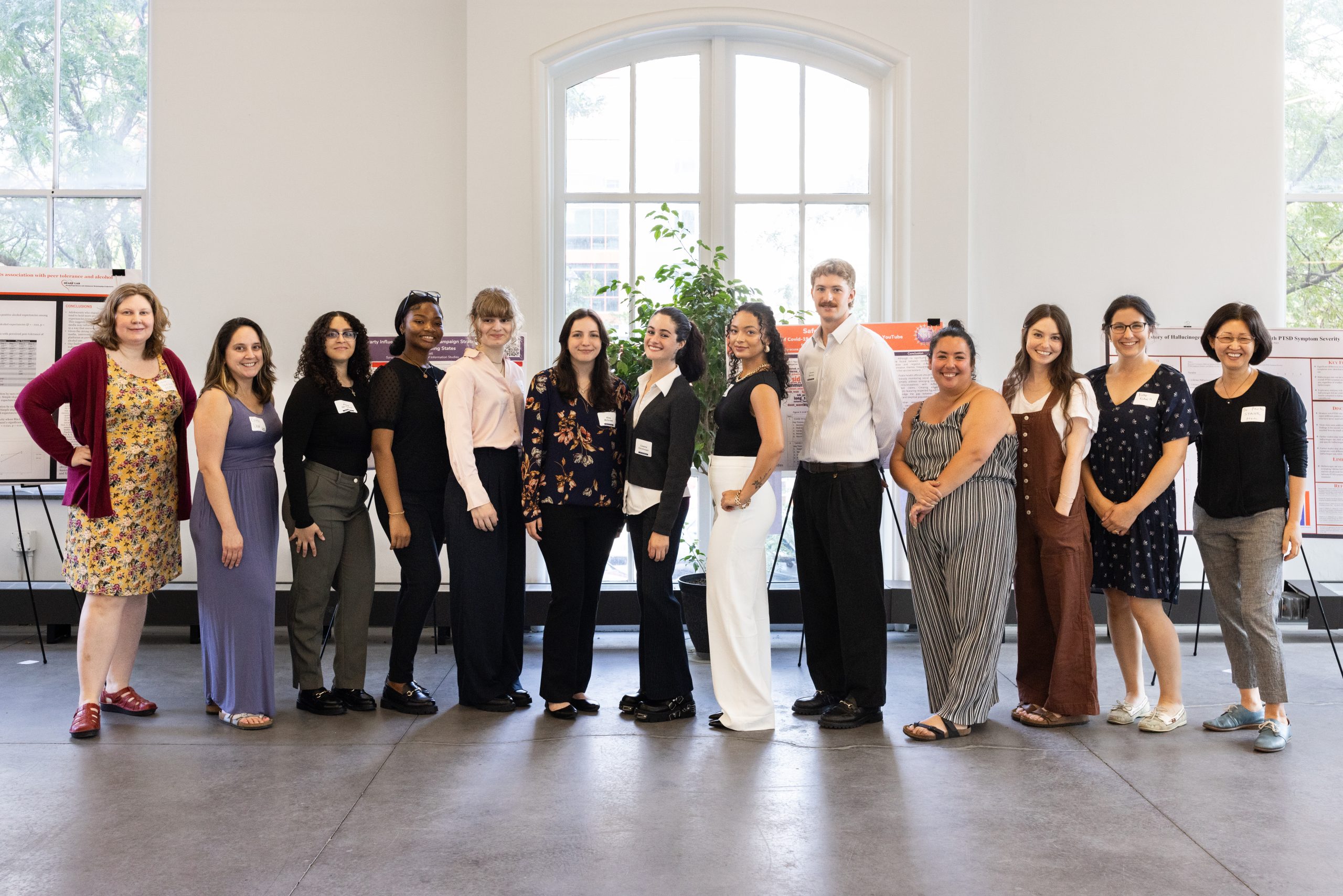
Left to right: Sara Vaselinko PhD, Kirstin Clear, Ashley De La Cruz, Alyssa Abrams, Rosanna Phillips, Kiley McGroder, Catalina Christiansen, De’Lisia Adorno, Ashton Sanford, Emma Schillinger, Lyric Tully, Katie Kidwell PhD, Aesoon Park PhD
Syracuse Training in Alcohol and Health Research – Undergraduate (STAHR-U) is an eight-week summer training program providing undergraduate scholars from underrepresented groups across the US with hands-on research experience in addiction and health research and supporting their career development in these fields.
This federally-funded program is open to students from across the country who have strong interests in addiction science and behavioral/mental health research (for example, alcohol, cannabis, and opioid use, sleep, eating, sexual health, chronic pain, trauma, ADHD, Autism) and pursuing a doctoral program in related disciplines (such as clinical, developmental, and school psychology, public health, neuroscience, and MD programs).
Student Experience

Undergraduate scholars are matched with a faculty mentor and a graduate-student (or a postdoctoral) co-mentor in diverse disciplines, including Clinical Psychology, Cognition Brain and Behavior Psychology, Social Psychology, School Psychology, Addiction Studies, Human Development and Family Sciences, Public Health, or Neuroscience at Syracuse University and Syracuse VA Medical Center.
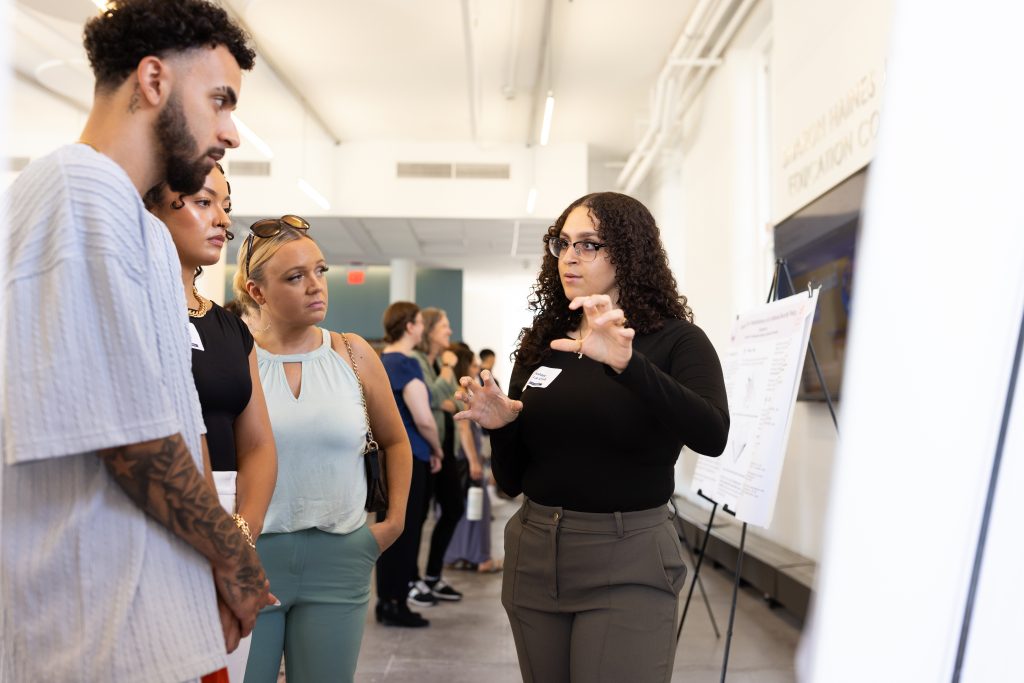
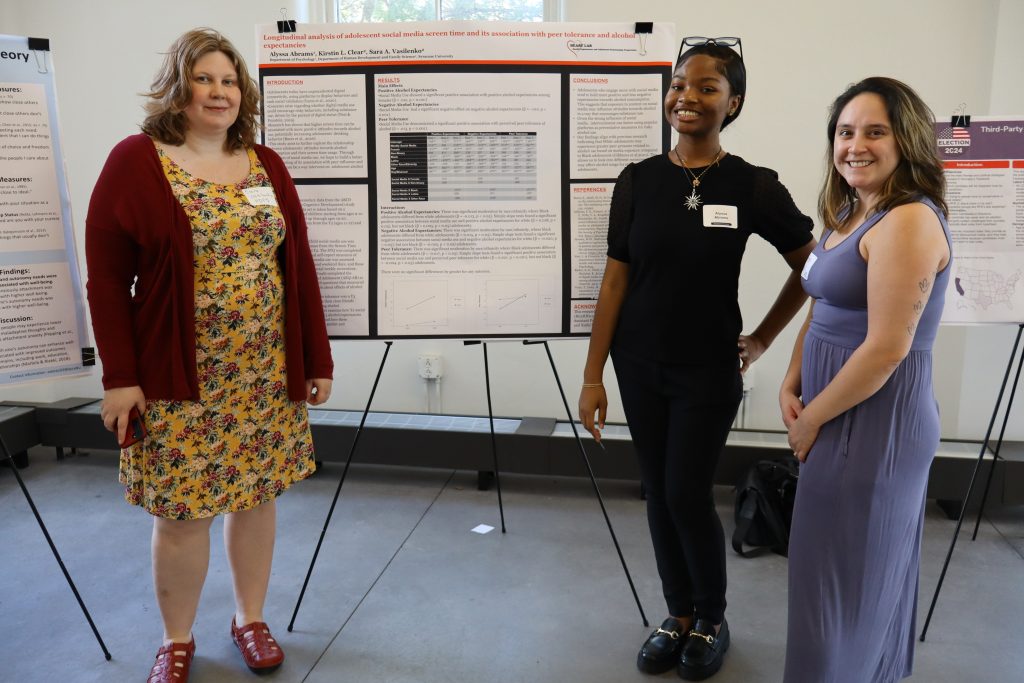
In the beginning of the program, scholars will be asked to develop a lab contract with their faculty and graduate mentors. Then, scholars will spend 20-25 hours per week for 8 weeks in their matched research lab gaining hands-on individualized research experience in alcohol, addiction, and health science. At the end of the program, scholars will showcase their original research project at a poster symposium.
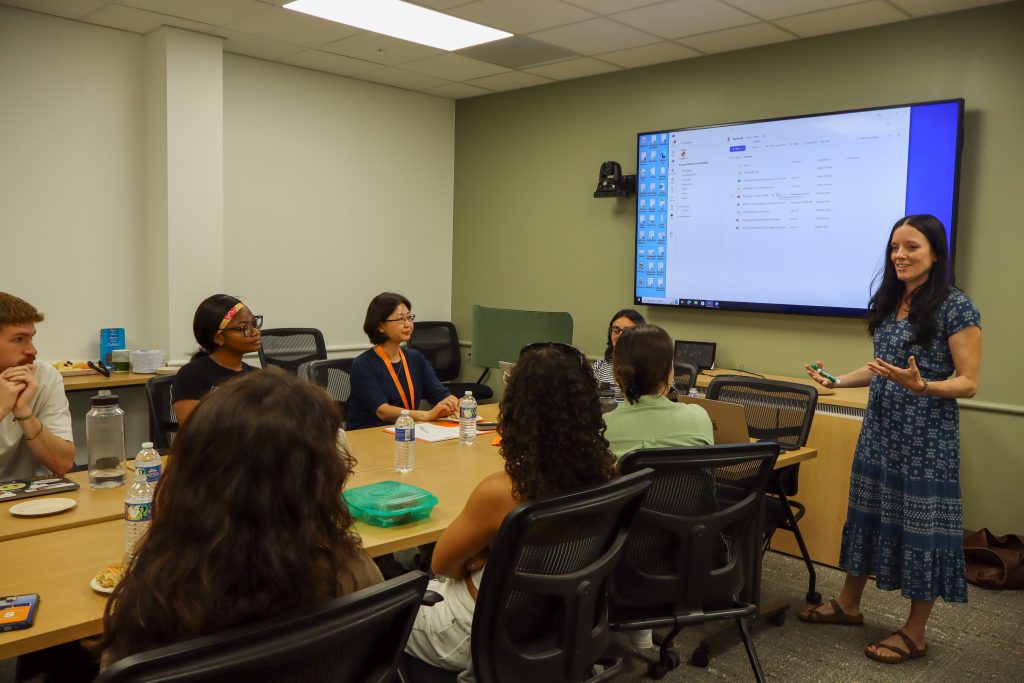
Scholars will also partake in a week of didactic training. For the next 7 weeks, students will join a weekly professional development series designed to help them prepare for graduate school applications (topics include finding mentors and lab research experiences, how to write a compelling personal statement, what happens after application submission).
Outside of gaining first-hand research experience and professional developmental training, housing will be with fellow STAHR scholars. There will also be social outings with peers and graduate co-mentors to develop a support network during and after the program.
We have a history of believing everyone’s contributions matter, which is why we continue to be committed to creating a welcoming environment for all. Our commitment is rooted in the belief that multiple points of view, life experiences, ethnicities, cultures and belief systems are essential to academic excellence.
Helpful Information for Applicants
Program Dates in 2026: June 1st to July 24th, 2026
Stipend: Each scholar will receive summer scholarship of $4,500
Benefits: Each scholar will receive university housing and meals at no cost to them for the program’s duration. Each scholar will also be eligible to receive up to $1000 to cover the costs of conference travel, and/or research-related costs (such as participant payments, books, supplies, poster printing).
Research Training Areas: Scholars will get training in alcohol, addiction and health research (for example, alcohol, cannabis, opioid, stimulant use, sleep, eating, sexual behavior, trauma, ADHD, Autism) which may apply to multiple related disciplines, including but not limited to clinical, developmental, and school psychology, public health, neuroscience, and MD programs.
Summer 2026 Program Schedule
Our residential summer research programs will run from Monday, June 1 through Friday, July 24, 2026.
| Monday | Tuesday | Wednesday | Thursday | Friday | |
| Week 1: 1st Week of June | Welcome event & dorm move in on Sunday | Didactics | Didactics | Didactics | Didactics |
| Week 2: 2nd Week of June | Research at the lab | AM: Professional Development Seminar – PM: Time in the lab | AM: Time in the lab – PM: Group Work Session & Social Activity | AM: Brown Bag & Check-in – PM: Time in the lab | Research at the lab |
| Week 3: 3rd Week of June | Research at the lab | AM: Professional Development Seminar – PM: Time in the lab | AM: Time in the lab – PM: Group Work Session & Social Activity | AM: Brown Bag & Check-in – PM: Time in the lab | Research at the lab |
| Week 4: 4th Week of June | Research at the lab | AM: Professional Development Seminar – PM: Time in the lab | AM: Time in the lab – PM: Group Work Session & Social Activity | AM: Brown Bag & Check-in – PM: Time in the lab | Research at the lab |
| Week 5: 1st Week of July (no program activities July 4) | Research at the lab | AM: Professional Development Seminar – PM: Time in the lab | AM: Time in the lab – PM: Group Work Session & Social Activity | AM: Brown Bag & Check-in – PM: Time in the lab | Research at the lab |
| Week 6: 2nd Week of July | Research at the lab | AM: Professional Development Seminar – PM: Time in the lab | AM: Time in the lab – PM: Group Work Session & Social Activity | AM: Brown Bag & Check-in – PM: Time in the lab | Research at the lab |
| Week 7: 3rd Week of July | Research at the lab | AM: Professional Development Seminar – PM: Time in the lab | AM: Time in the lab – PM: Group Work Session & Social Activity | AM: Brown Bag & Check-in – PM: Time in the lab | Research at the lab |
| Week 8: 4th Week of July | Research at the lab | AM: Professional Development Seminar – PM: Time in the lab | Practice Poster Session | Poster Session Symposium | Exit luncheon & dorm move out by Saturday night |
Who Can Apply
We encourage applications from students who meet the following criteria:
- Interest in pursuing a doctoral degree (PhD or PhD/MD) in psychology or behavioral health
- Have a minimum GPA of 3.0
- A U.S. Citizen or permanent resident (due to federal funding requirements)
- Students who are not graduating in May/August of 2026
Application Process
The online application for the 2026 STAHR Program closed for Summer 2026 on March 1st 2026.
The application process is completed by following the steps below:
- Fill out the application
- Once open, you may view/download a PDF of the application form
- Once open, you will click here to open the application on Qualtrics
- Upload your resume/CV
- Share two to three reference contact information (no letters required)
- Click submit
Frequently Asked Questions
Q: Is this program in-person and residential, or can it be done virtually?
- A: Undergraduate scholars must participate in the program in-person. Some research lab meetings or individual meetings with faculty mentors or graduate co-mentors can be conducted virtually.
Q: Are students expected to continue to work in the same lab after the program?
- A:We hope that students are interested in continuing to do research, either in the same lab or a different lab, after the program’s completion. Our programs have additional funding available for scholars to continue their research and/or present it at a conference. There will be follow-up events every 6 months with past scholars to provide career developmental support such as their research engagement and graduate school application.
Q: How frequently are stipends paid?
- A:Per Syracuse University policies, students should receive stipends once per month. Thus, half of the stipend for the summer will be received at the end of June, and the other half will be received at the end of July, assuming the continue in good standing with the program.
HOUSING SPECIFIC QUESTIONS:
Q: Do students have to live in the dorms?
- A:Funding of room and board is provided through the program, so we encourage students to take advantage of this. However, we understand that students may choose to live in their own off-campus housing in Syracuse, and they may opt in to receive a meal plan only.
Q: How does our meal plan work?
- A:You will get 19 meals per week (via the GET app or your ID card swipe). Scholars will have a meal plan from the Sunday they move in through the Saturday of the 4th week of July (last day of the program).
Q: How does housing work if we opt in?
- A:Your housing check-in will be any time after 8 AM on Sunday, the first week of June.
- An on-call person is available to help you with check-in if anyone arrives after 8:00PM.
- Your dorm moving out will be on the last Saturday of the program.
- Your roommate will be arranged by the SU housing services office; they will aim to match you with another student in our program.
Q: Can I park in the dorm parking lot?
- A:Unfortunately, no parking will be made available at the dorm. Please contact Parking & Transportation Services regarding parking pass options to purchase.
NIH Acknowledgements:
This program is supported by the National Institutes of Health grant award, R25 AA029830 awarded to Aesoon Park, PhD, Department of Psychology, Syracuse University
Contact Us
If you have any questions or concerns, please contact us:
Program email: sparcstahru@syr.edu
Program Principal Investigator:
Aesoon Park, PhD | Dr. Park’s Faculty Page
Email: aepark@syr.edu
Co-Investigators:
Sarah Woolf-King, PhD | Dr. Woolf-King’s Faculty Page
Stephen A. Maisto, PhD | Dr. Maisto’s Faculty Page
STAHR-U Collaborators:
Jessie Joyce, PhD – SPARC Program Director
Kelly Eulgardo
Program coordinator:
Olivia McKenna
Email: osmckenn@syr.edu
Program Research Assistants:
Chace Chu (SU ’25), Kiley McGroder (SU ’25 & STAHR Cohort Summer 2024), and Hana Shroff(SU ’25).